




8 steps to deliver Fiori on a budget
 Digital transformation provides an enormous opportunity for organisations to re-think their core business processes and deliver entirely new ways of getting work done. In reality, you’re not going to deliver all the benefits of digital transformation without some investment – probably ongoing investment. And realistically, many organisations don’t have the appetite or the budget for large-scale transformation programmes, but want to explore what they can achieve with Fiori on a budget.
So there’s a gap between what’s possible and what’s probable, and a need for organisations to find a way to make the most of the budget they are able to secure. I propose the following steps for organisations to begin their Fiori journey and deliver tangible results, without major investment.
1. Start Small
There are a bunch of things you can do to get started for free. Download and install the software you might need for your Fiori run-time environment – SAPUI5, SAP Gateway etc.
You can start with a SAP Cloud Platform trial account, so you have access to SAP WebIDE. You will need to decide whether it is easiest for you to run Fiori on premise or on the cloud. If it’s the cloud then you’ll need to configure the cloud connector, and make decisions about user management. It may seem overwhelming at the start, but actually it’s quite straightforward to get started, and you soon get used to the terminology.
At the end of this you need a simple Fiori LaunchPad set-up: somewhere that you can deploy apps to.
2. Hook together existing web-based resources
Once you have the Fiori LaunchPad, you can start adding in web-based resources as static tiles easily. Using simple URL hyperlinks you can link to SAPGUI screens (via web GUI or the Business Client), Enterprise Portal content, custom webDynpros. It’s an easy extension of this to consider using SAP Personas to simplify some of your SAPGUI transactions too. And of course you can launch non-SAP resources.
3. Install Library apps
The library apps provided by SAP are free, so it makes sense to do the research to see what works for you. You will find that many of the apps require recent software versions, or HANA, so you can expect some constraints. However, you should find a bunch of Fiori apps that you can deploy in order to try out for yourself.
4. Get trained in SAPUI5
SAPUI5 is not some mystical programming language that is difficult to find out about and learn. It is an open language – and there is lots of information available on the web. On-line training is available free-of-charge through OpenSAP. And so you have no need to become reliant on consultants or contractors: if you make your in-house team available then you can be self-sufficient.
5. Extend your library apps
Armed with free software, free apps and free training, you can set about enhancing a library app to make it a closer fit to your business requirements.
So although you may have invested some time and effort, you should be able to deliver your first proper Fiori experience for minimal financial outlay.
6. Use an acceleration framework
Once you’ve moved beyond the Library apps, and have a desire to design and deliver a new Fiori-based business process, then it is time to look for additional tools which will accelerate the development process.
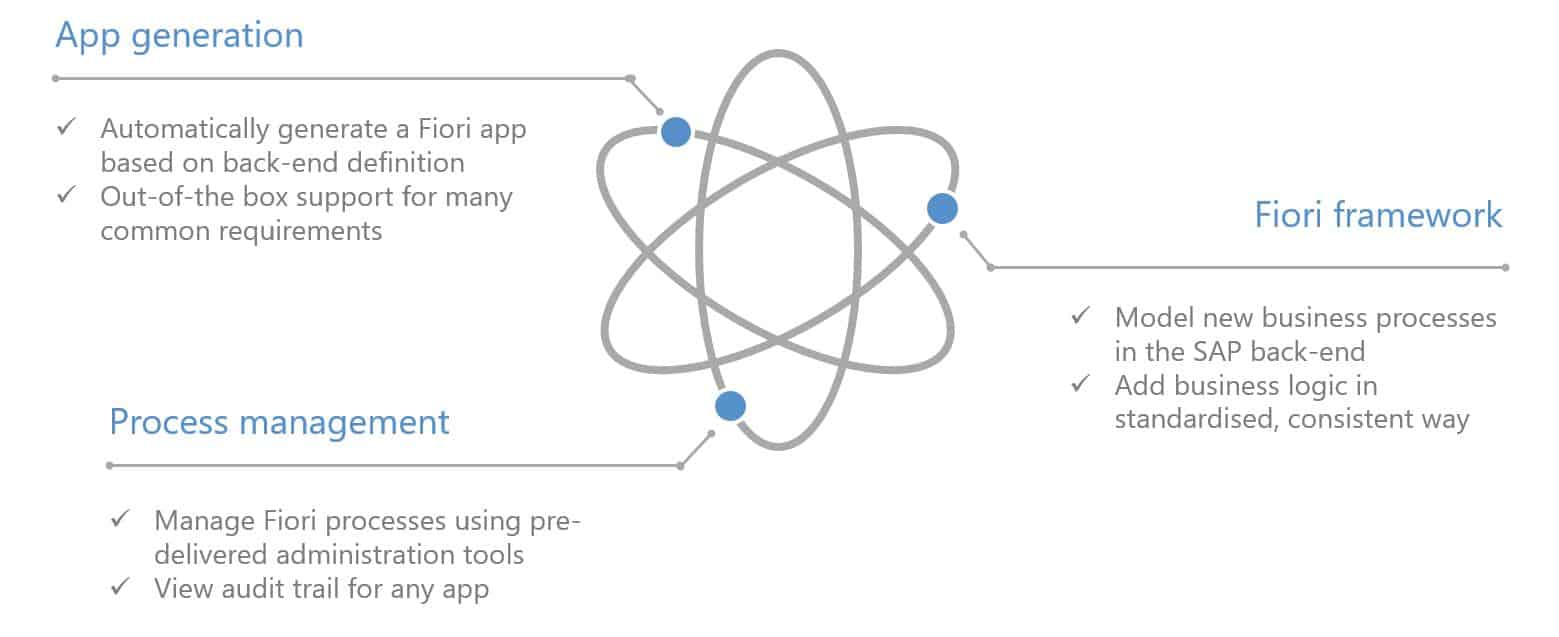
Stelo is the Fiori framework from Arch. Using Stelo you can model new business processes and generate new Fiori apps for those processes, in many cases much more quickly than by using the standard toolset. You can get started with Stelo for a very low cost. Find out more!
7. Transform one process at a time
Now you can begin considering the business case to truly transform your processes. Consider one end-to-end process at a time, and design each user touch-point through the process. I don’t have to provide a framework for selecting the process, as it will be obvious. You will know those processes with multiple manual tasks, or those processes where users ‘fight’ the system to get work done, or where real-life has left your traditional SAP process behind.
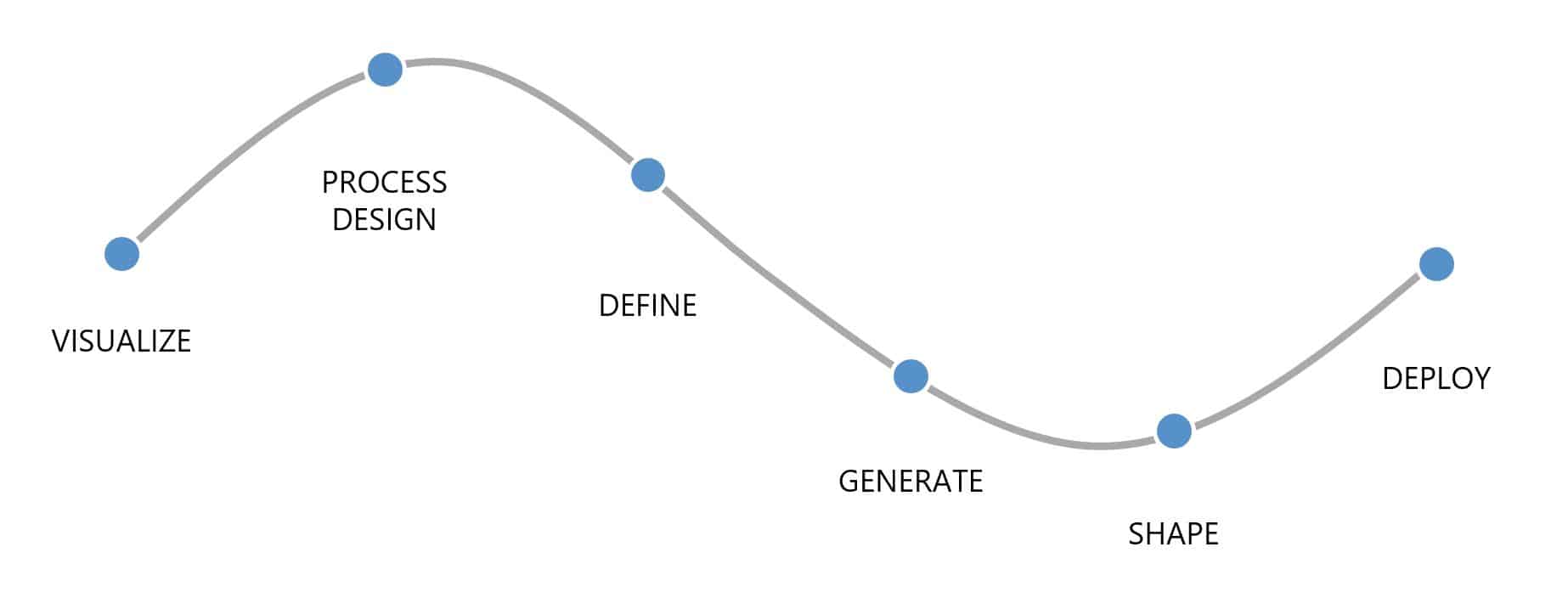
Design-thinking requires a really different approach for many organisations: When the budget is tight, it seems wasteful to focus heavily on the user experience – that’s what you get with Fiori, right? Wrong. You need to spend time visualizing the app, defining the solution for each user in the process, in order to deliver something transformational.
Don’t try to change every touchpoint for every process based on a single persona, but instead focus on an entire business process, as that’s where you will find your new process efficiencies.
8. Demonstrate the return
You are on a journey. At each stage of the journey your budget takes you so far. In order to continue on your journey you are going to need to repeatedly prove its value. So you need to be able to demonstrate the return. You might measure that in cost savings; in employee satisfaction; in improvements in customer service, or in other measures.
When making your business case my advice is to consider many currencies. Of course, we’d expect that transformational projects will deliver cost savings in the future. However, your currency may be risk, or it may be value as well as cost. You should be able to demonstrate that through incremental investment you can return reduced risk, additional value or both.